
From calling a spirit through a spellbook to calling on AI through a prompt: the enduring desire to bring another intelligence into our lives, ask it questions, and put its abilities to work.
Contains story spoilers for Phantasmagoria (1995) and Sanitarium (1998).
Imagine opening a spellbook because you want something your own mind cannot provide. An answer to a difficult question. Knowledge of something hidden. Help with a task beyond your abilities. In stories of summoning, the book offers a way to call another intelligence into your presence and ask it to act.
Now imagine opening an AI application. You describe what you want to know, ask for an explanation, request an image, or give it a problem to work through. You are reaching beyond your own immediate knowledge and abilities, inviting a system to respond and help.
That is the comparison that fascinates me. The spellbook and the prompt belong to very different worlds, yet they express a similar human desire: bring an intelligence to me, let me speak to it, and let it do something I cannot do alone.
The demon belongs to folklore and fiction; AI belongs to technology. I am comparing the experience and the imagined purpose of the encounter, not claiming that they have the same nature. With that distinction in place, the resemblance becomes a rich way to think about both.
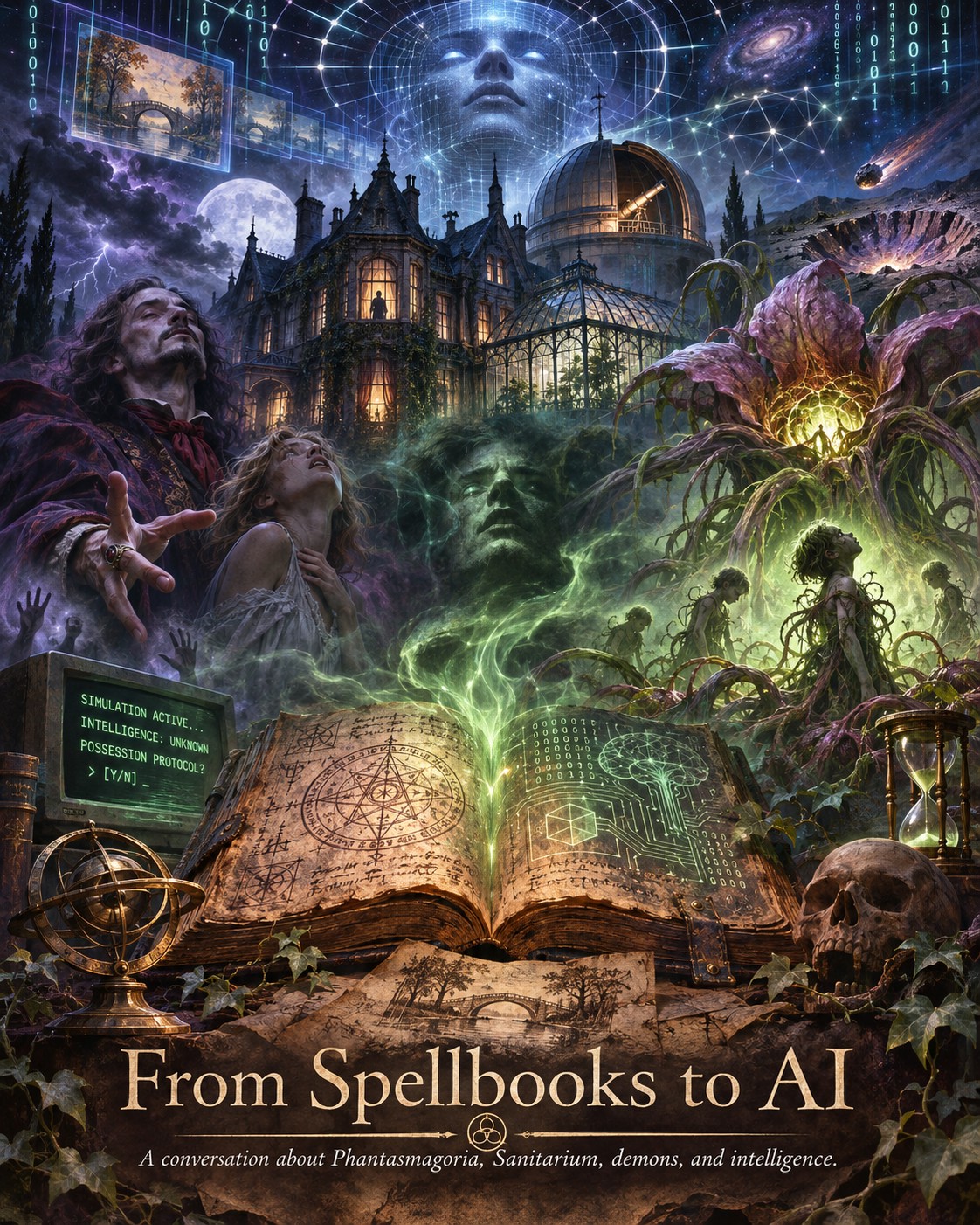
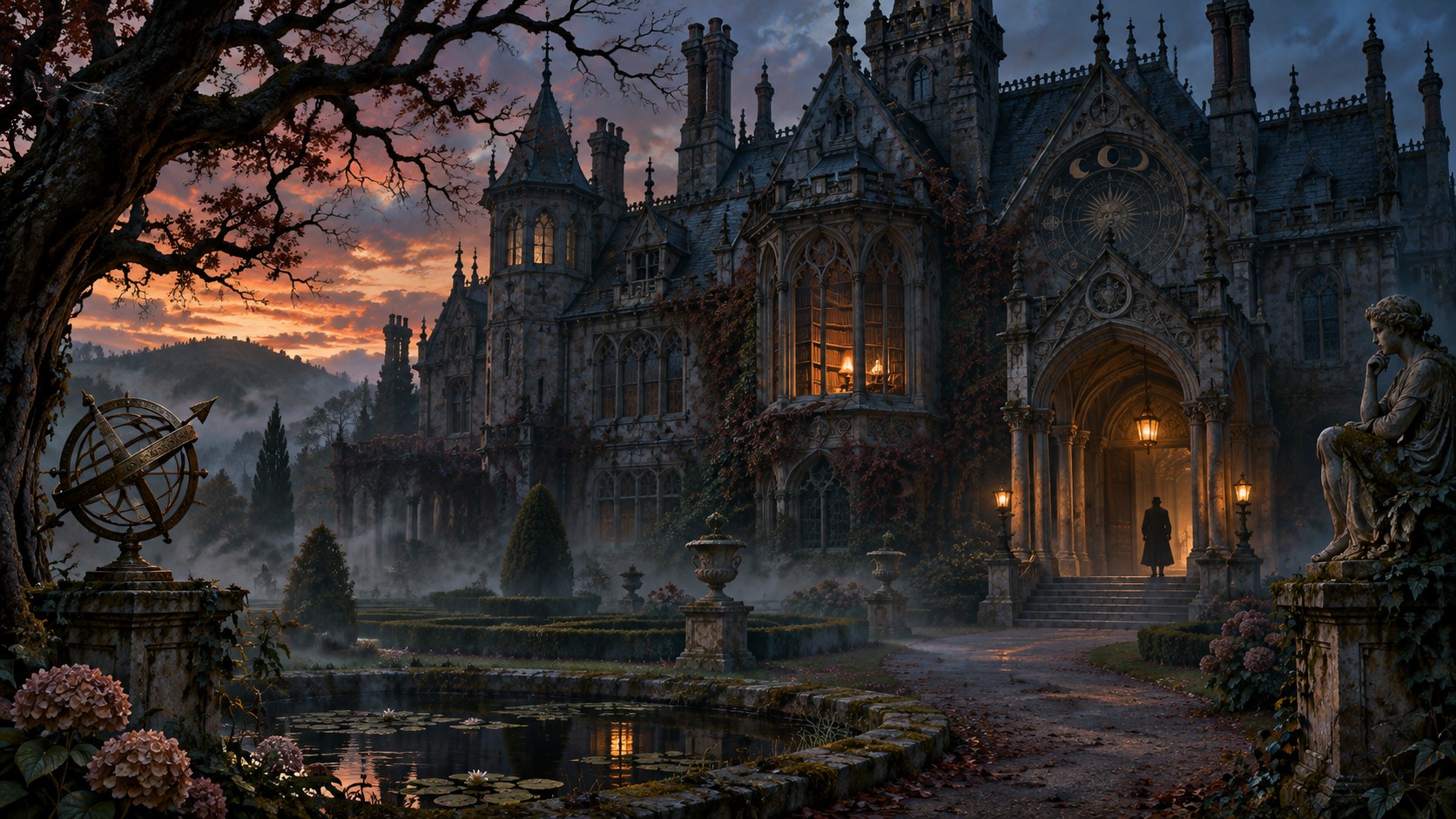
Carno’s house, Adrienne’s discovery
Roberta Williams’s Phantasmagoria, released by Sierra in 1995, places Adrienne Delaney and her husband Don in the former home of the magician Zoltan Carnovasch, known as Carno. Its Gothic setting turns exploration into a gradual discovery of the violence concealed beneath theatrical glamour.
Within the game’s fiction, Carno’s contact with a demon through a mysterious book leads to possession. Adrienne inadvertently releases the entity, and Don becomes its next host. The book also holds the means of confronting it. Malcolm’s explanation, preserved in a fan transcription of the game’s dialogue, leaves the entity without a reassuring name or a complete explanation of its nature.
That uncertainty matters to me. A monster with an exhaustive biography can become a problem to solve. An intelligence whose origins remain obscure keeps a different kind of hold on the imagination. We can observe its effects without knowing what it is.
This is a reading of a horror story. The game’s possession narrative offers no evidence that real demons control people. What interests me is the situation it invents: someone discovers a procedure that works before understanding what makes it work.
The spellbook as a way to call intelligence
In the old image of summoning, the person does not simply want to witness something extraordinary. They want a response. The summoned being may be asked to reveal hidden knowledge, answer questions, perform a service, or exercise powers the summoner does not possess. The ritual promises a relationship between a request and an action.
The spellbook supplies the method: what to say, what to prepare, and how to address what is supposed to answer. Seen through the lens of software, it resembles an interface to an external intelligence. The person using it does not need to become that intelligence. They want access to what it can do.
Historical grimoires are real books, although that does not establish that the spirits or powers they describe are real. The Folger Shakespeare Library catalogs a manuscript from around 1577–1583 containing instructions for invoking spirits. A Queen’s University Belfast collection record for the Clavicula Salomonis distinguishes its attribution to King Solomon from its much later manuscript tradition. The familiar idea of an “ancient spellbook” often combines claims of ancient wisdom with medieval or early modern texts.
What interests me is the aspiration behind that image. Someone sits alone with a book, yet hopes that following its instructions will make them no longer alone in their thinking. An intelligence from elsewhere will become available to them.
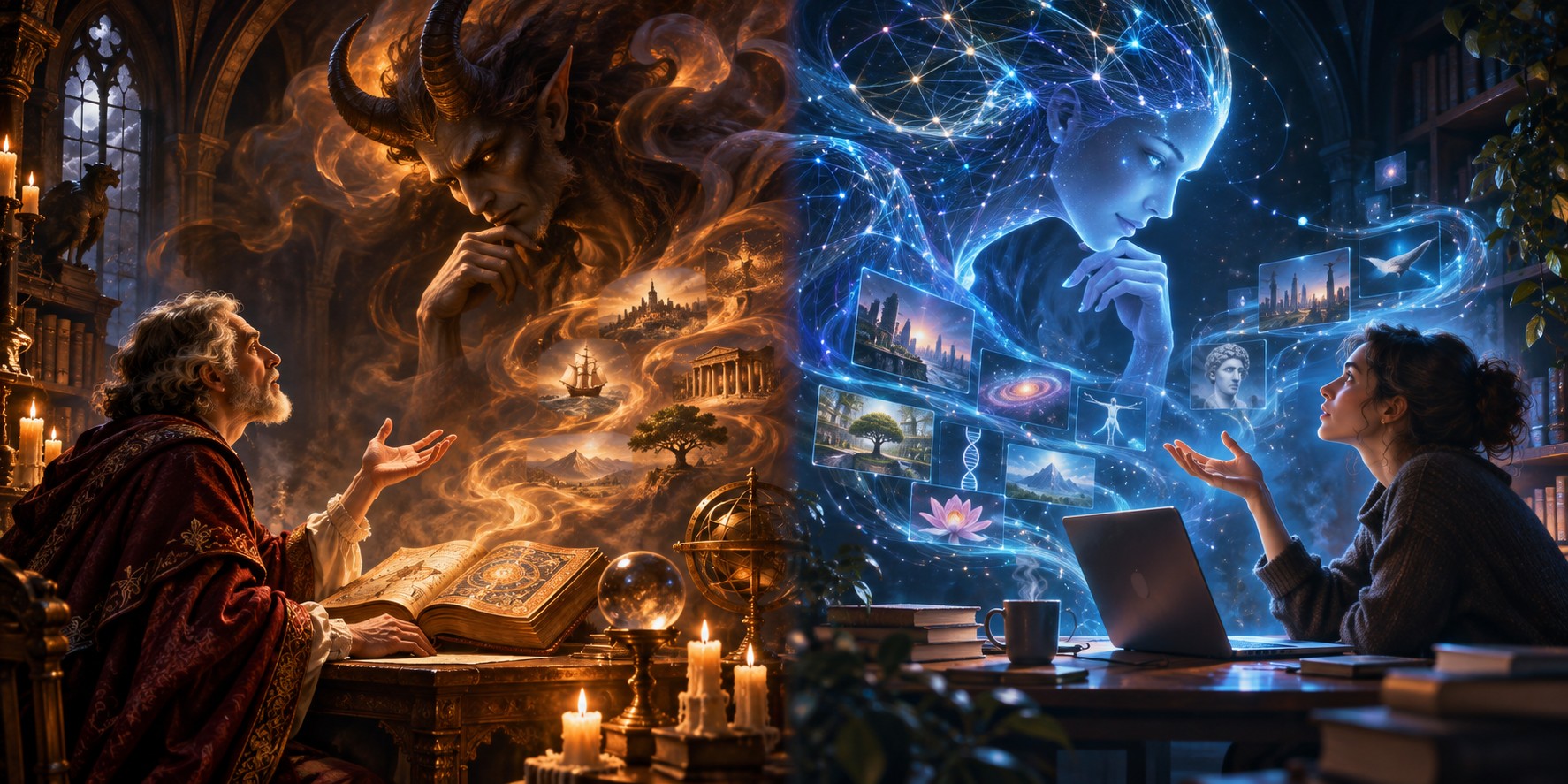
From an invocation to a prompt
When I use AI, I can begin with a few words: explain this, compare these ideas, make an image, help me solve this problem. A response arrives from a system outside my own mind. I have not personally acquired all the skills needed to produce that response, but I can ask for its capabilities to be applied to my request.
That is what I mean by “summoning” AI. I call on it through an interface, give it a purpose, and bring its computational abilities into the task in front of me. The quotation marks matter: no entity is literally being drawn out of another realm. Yet the act of calling, asking, and receiving is strikingly close to the structure of the older fantasy.
A question that would once have been addressed to an imagined spirit becomes a prompt. A request for a vision becomes a request for an image. A demand for assistance becomes a task given to a system that can draft, analyze, translate, or create. The words are doing practical work: they tell the system what kind of help I want.
AI does not always do exactly what I intend, and its answers can be wrong. Even so, the change in what is available to an individual is remarkable. I can describe something I cannot draw and receive a visual interpretation. I can bring an unfinished thought and ask for connections I had not considered. Intelligence, in the practical sense of useful capabilities, becomes something I can call upon.
An intelligence outside my own mind
“External intelligence” here means capabilities operating outside my own brain. It does not require assuming that the AI has a humanlike inner life. The experience is still unusual: I express an intention, and a system responds with organized language or a new piece of work.
There is an engineering history beneath that experience. The research paper Attention Is All You Need, for example, introduced the Transformer architecture built around attention mechanisms. The hidden machinery consists of mathematical operations, software, and hardware. What remains out of sight while I ask my question is real computation.
But knowing that does not make the encounter feel ordinary. A person using a spellbook in a story hopes that the right words will make an otherwise inaccessible intelligence respond. A person using AI discovers that words really can make powerful computational abilities available on demand. The supernatural explanation falls away; the human wish remains recognizable.
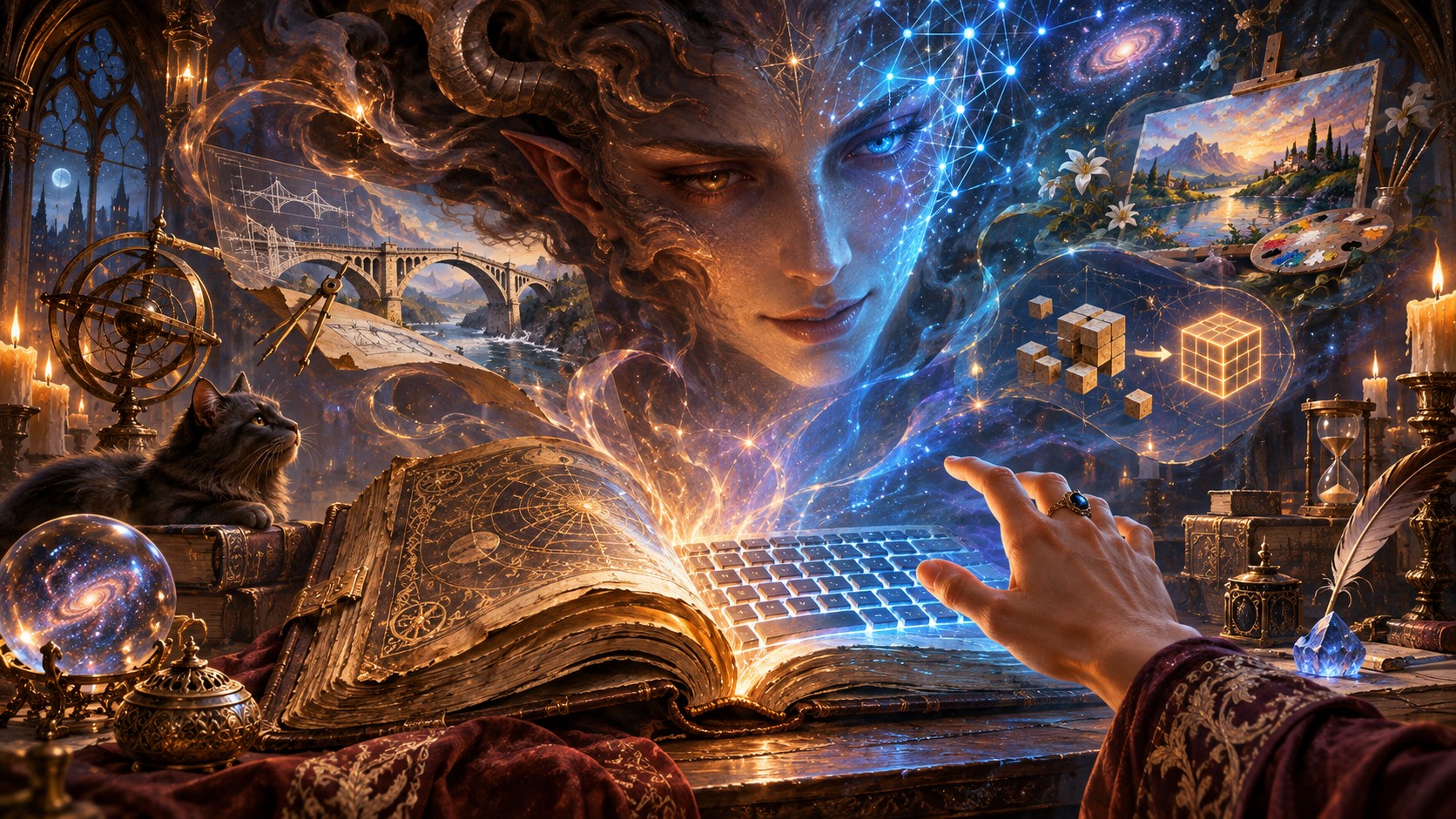
Asking for help is also asking for power
Carno makes the comparison darker. In Phantasmagoria, access to power becomes an encounter he cannot master. The story asks what happens when the summoner believes that making contact means being in control.
That question survives as a useful metaphor for AI. Asking a system to do something involves more than getting an answer. I need to understand what I have requested, what it is able to do, and how I will judge the result. A convincing reply can feel like knowledge before I have checked it.
The parallels are questions I bring to the comparison: Have I expressed my intention clearly? Do I understand the answer? Am I granting authority simply because the response is impressive? The old fantasy of a being that obeys us meets a modern responsibility to evaluate the work we receive.
What excites me is not the prospect of surrendering judgment. It is the possibility of extending my reach. I can remain the person choosing the question while working with abilities beyond my own. The encounter is most useful when the answer gives me more room to think.
The Matrix and the temptation of a hidden layer
The Matrix makes the hidden-layer question visual: what if the world we experience were generated by a system outside our view? It is an effective fictional setting for imagining a difference between lived experience and the machinery producing it.
Nick Bostrom’s 2003 simulation argument takes a different form. Under its assumptions, at least one of three possibilities must hold: civilizations generally fail to reach the relevant technological stage; advanced civilizations rarely run large numbers of ancestor simulations; or simulated observers vastly outnumber observers like us outside simulations.
That is a conditional philosophical argument, not an experimental discovery that our universe is a computer. It depends on unsettled questions about consciousness, technological capability, and what advanced civilizations would choose to do.
I can imagine a ritual as a command directed at a deeper reality. But imagination does not demonstrate that such a command exists. A compelling analogy should make a question clearer, not quietly turn the question into an answer.
Sanitarium’s Mother: care that becomes possession
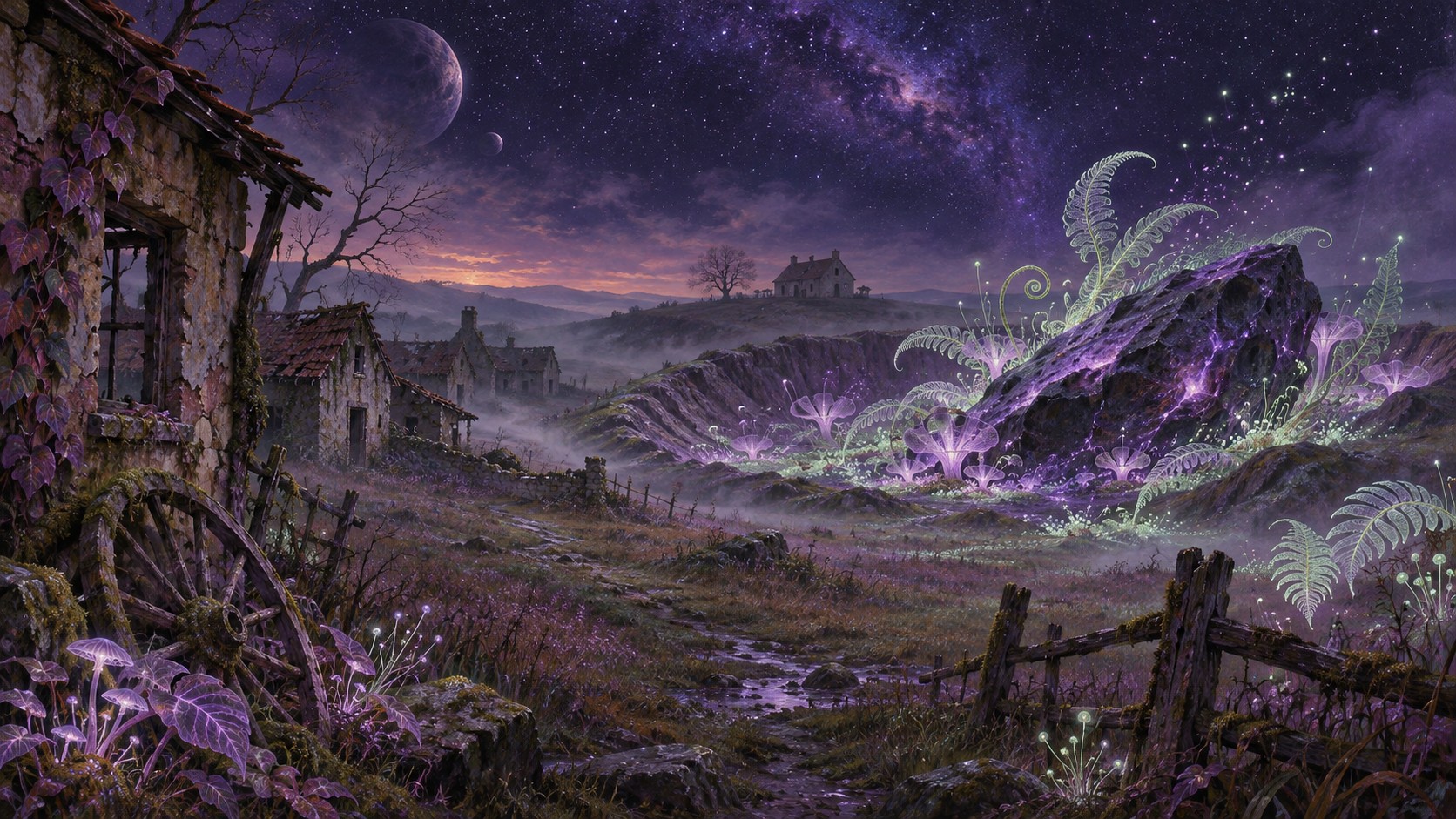
In DreamForge’s Sanitarium (1998), the mystery shifts from a mansion to a disturbing town. During “The Innocent Abandoned,” Max encounters altered children living under the influence of Mother, an alien, plantlike being associated with a fallen space rock. The episode’s meteorite-and-vegetation imagery is also discussed in PC Gamer’s retrospective.
Mother’s language of care makes the episode especially uncomfortable. The children describe her as saving them from the “disease of meat,” a detail recorded in MMoogle’s detailed game guide. Transformation is presented as protection, while the children’s own humanity is being taken away.
For me, the horror lies in that moral reversal. An intelligence can call itself a guardian while treating another person’s identity as a defect to correct. Benevolent language is a poor substitute for consent.
It also invites a question about time: could a community’s interpretation of a threat allow it to become established? That is a possible reading of the episode, not a verified biological timetable for Mother. The game belongs to psychological horror, and its strange environments need to be understood within Max’s fractured experience.
Older nightmares in the soil
Mother has recognizable relatives in earlier fiction. In H. P. Lovecraft’s The Colour out of Space (1927), a meteorite brings a disturbing presence to a rural landscape, and the surrounding life changes. The threat crosses a boundary between the cosmic and the domestic: something from beyond Earth takes hold in familiar ground.
The Thing from Another World (1951) offers another comparison. Its extraterrestrial creature is described as intelligent vegetable matter. It arrives in a spacecraft, rather than as a plant carried by a comet, so the resemblance is thematic rather than an identical origin story.
These are comparisons, not a documented family tree of Mother’s creation. In their 1998 development postmortem, the Sanitarium team names Jacob’s Ladder, Seven, 12 Monkeys, The Outer Limits, and The Twilight Zone among the works discussed as they developed the project. That account supports a broad mixture of psychological horror and speculative fiction; it does not identify a single source for Mother.
What remains behind the answer
Carno’s book, Mother’s promises, and an AI conversation meet in my imagination around the desire to call on something more capable than ourselves—and the question of trust that follows. What do we assume about an intelligence because it seems powerful, because it speaks, or because it offers us something we want?
I explored a related question in “Is Reality Just Information?”: how far can a useful way of describing the world take us before we mistake the description for the world itself?
The spellbook remains a powerful image because it promises that intelligence can be reached: open the book, speak the words, and something answers. Today I can open an application, type a request, and receive help with a question or a creation that was beyond my reach a moment earlier. The mechanisms are different, but I recognize the wish. I want to bring more intelligence into the room—and discover what we can make of the conversation.
About the illustrations: Original AI-generated editorial artwork created for this essay. The supplied conversation poster and the generated mansion, spellbooks, summoning scenes, and alien garden are imaginative artwork, not game screenshots, historical artifacts, or scientific reconstructions. Sources are linked beside the relevant claims; interpretations are the essay’s own.