
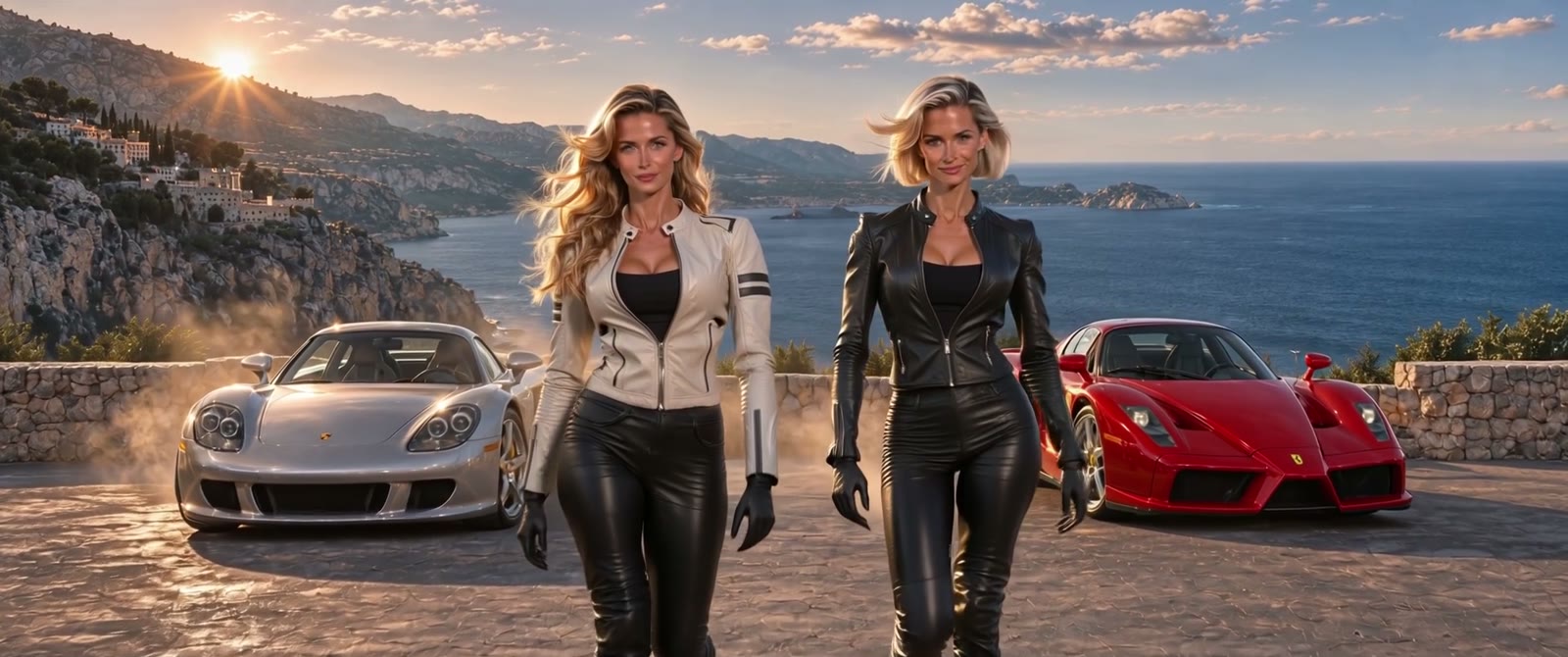
A street racer in a silver Porsche Carrera GT lines up against a red Ferrari Enzo, and the driver of the Enzo is her, ten years older. Two AI short films, six minutes in all, rendered at home on two GPUs working together.
Part I: Ten Years Ahead
Watch Ten Years Ahead on YouTube
A rain-soaked neon night, an empty six-lane avenue and a painted start line. Maya has never lost a race. The woman who rolls out of the tunnel mist beside her has the same face, a platinum bob, a scar through one eyebrow, and one request: “Don’t win this race.” The two-minute film is a philosophical duel at 300 km/h about the difference between speed and running away, and about the one race worth losing.
Part II: The Collector
Watch Ten Years Ahead II: The Collector on YouTube
The sequel picks up the next night. Maya let her future self win, and watched her dissolve into light. It wasn’t freedom. It was a payment. The blonde in the cream trench coat who fired the starting flare is the Collector, every race she starts costs the loser ten years, and she drives a black BMW M5 CS. Four minutes of burnouts, tandem drifts and a duel that runs from the neon city, through a coastal tunnel, out onto Mediterranean sea cliffs at sunrise.
How they were made
Both films were made the same way I made Exit Velocity, with one big change: this time every shot starts from a painted keyframe.
- Two machines, one film. Every ten-second shot was generated with the LTX-2.5 video model, which creates the picture, the sound effects and the dialogue together. My RTX A6000 workstation rendered most shots at about fourteen minutes each; an HP Z840 with an RTX 3060 rendered the car-only shots in parallel at about fifty-three minutes each. Part II is 24 shots plus retakes.
- Keyframes for consistency. Text prompts alone kept changing the car models between shots. So Codex first painted a reference sheet for every character and car, then one keyframe per shot, and the video model animated each shot from its keyframe. That is what keeps the Enzo an Enzo and the M5 an M5 from the first shot to the last.
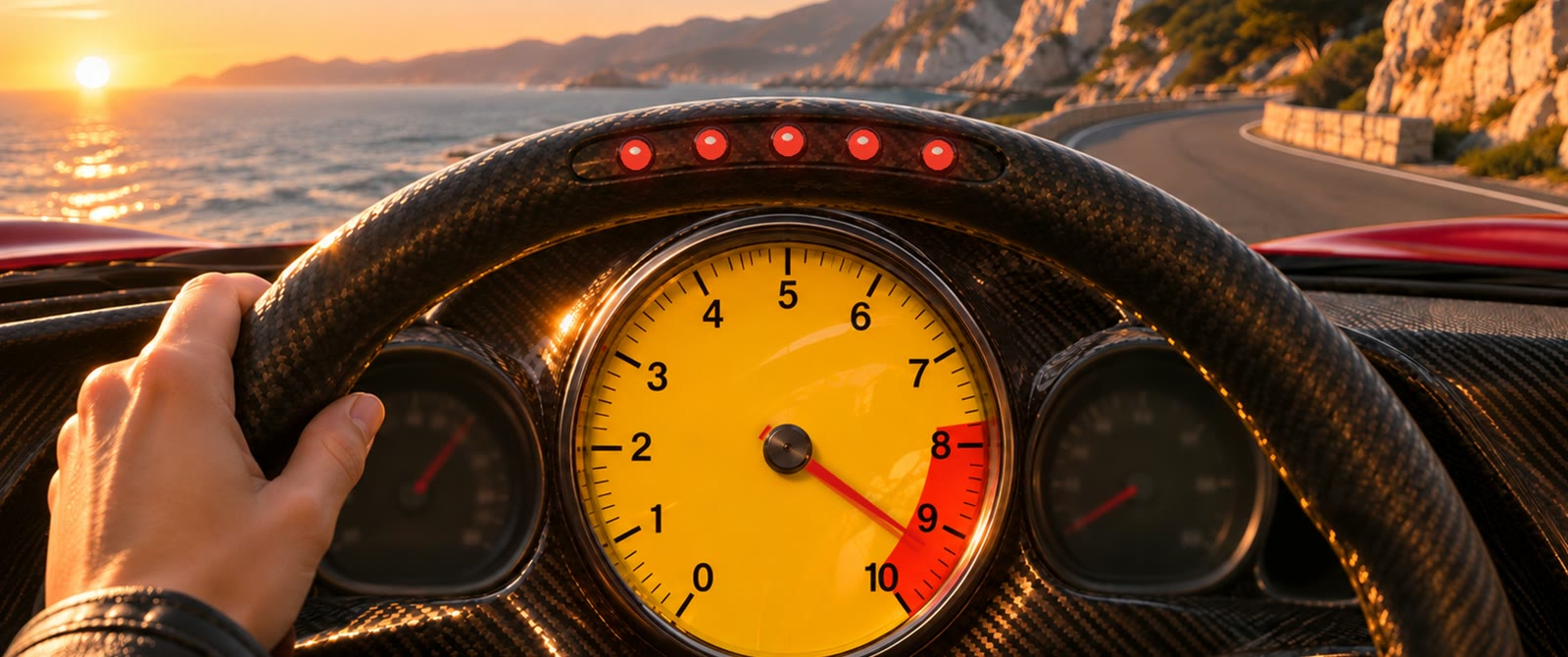
- Getting the cars right. The instrument clusters had to match the real cars: five overlapping analog gauges in the Carrera GT, the yellow-faced tachometer and the red shift lights on top of the Enzo’s carbon wheel, and the fully digital angular rev bar of the M5 CS. The video model refused to swing a rev-counter needle past the middle of the dial, so for the Carrera GT and the Enzo the needle was animated by hand on a needle-free frame, all the way into the red zone.
- Original music. Part I has an epic hybrid-orchestral score, Part II a cinematic rock-orchestral one, both generated with ACE-Step and cut to the picture so the hits land on the launch, the rewind, the sunrise and the final drift.
- The edit. The widescreen letterbox, slow motion on the drifts and glory walks, and ducking the music under every line of dialogue were done in ffmpeg. Every line was checked with speech recognition to make sure it can be heard over the engines.
- The team. I directed it with Claude, which wrote the story and shot prompts, split the renders between the two machines and assembled the final cuts.
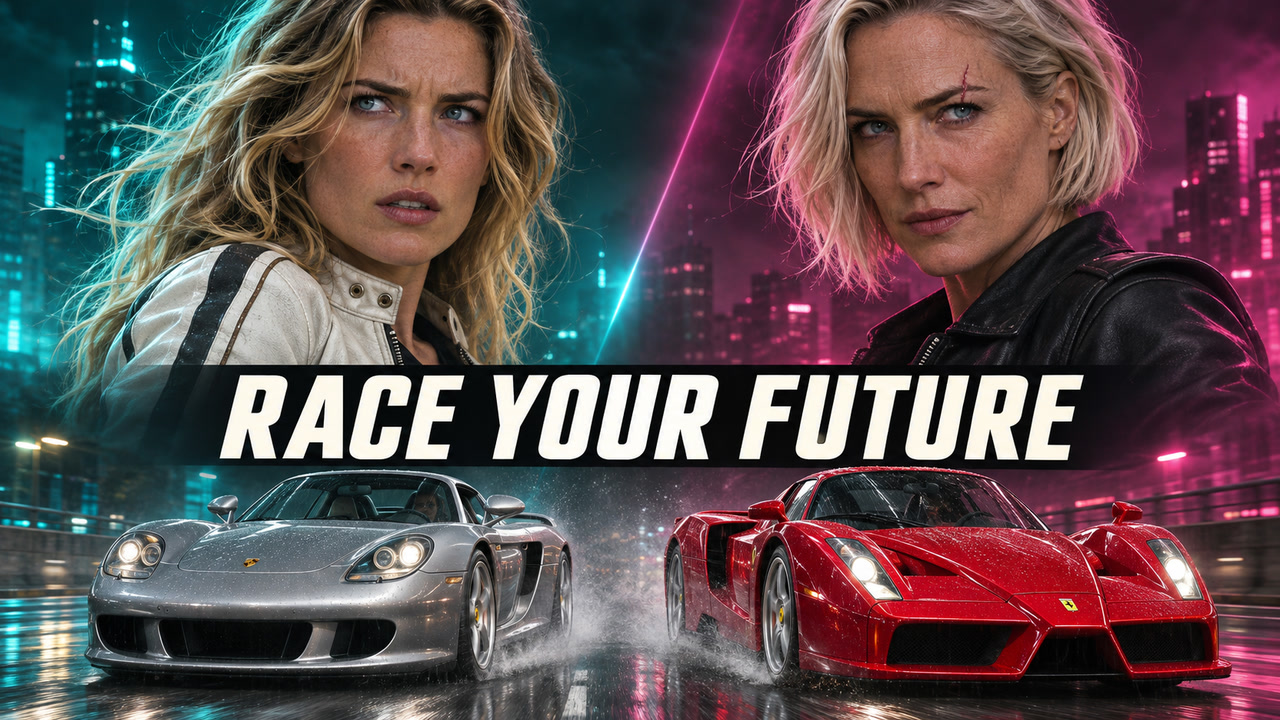
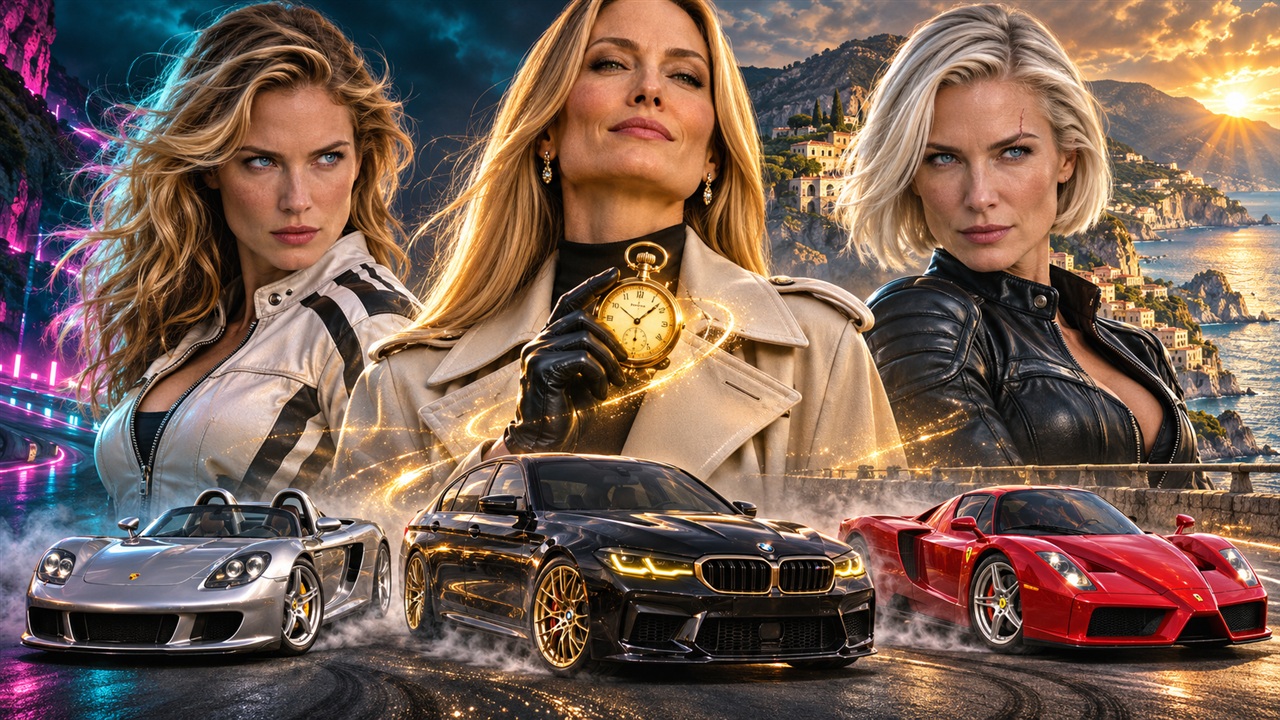
The thumbnails
For both films, Codex watched the finished cut and painted a new thumbnail from its own imagination instead of using a frame from the video.
The one-minute versions
Each film also has a vertical cut for phones.
All characters, footage and music in these films are AI-generated. Not affiliated with or endorsed by Ferrari, Porsche or BMW.